Accountability Chaos

Accountability Chaos

Life in the coop is never dull. After our two broody hens hatched their eggs, another hen decided it was her turn to be broody. Then a fourth hen decided to join her. So, we now have two hens with peeps and two broody hens, and the other three are trying to fend off Hei Hei.

Applying what I learned after my last round of broody hens, I left the hens in the coop and upon reaching 12 eggs (a nice sized clutch), we marked the designated eggs for them to incubate. After that, we removed any new or unmarked eggs. All was fine until we decided it was time to move the 4-week-old peeps and their mamas back into the main coop to make room in the broody hen coop. One mama was happy to roost up in the coop alongside her peep, but the other hen, Sally the Survivor (the lone survivor of the Great Chicken Massacre last May), wanted to keep her peep under her at night.

Sally is feisty hen, so, she kicked the broody hens off their eggs and decided she would sit on the eggs and her peep at the same time. This has caused lots of confusion in the coop, as the broody hens weren’t sure what they should be doing since another hen was sitting on their eggs. This resulted in hens moving the marked eggs to other locations in the coop, rotating hens sitting on the eggs in the nesting box, and at times, no hens sitting on the eggs. We had to throw away four eggs because they had been abandoned in various locations in the coop.

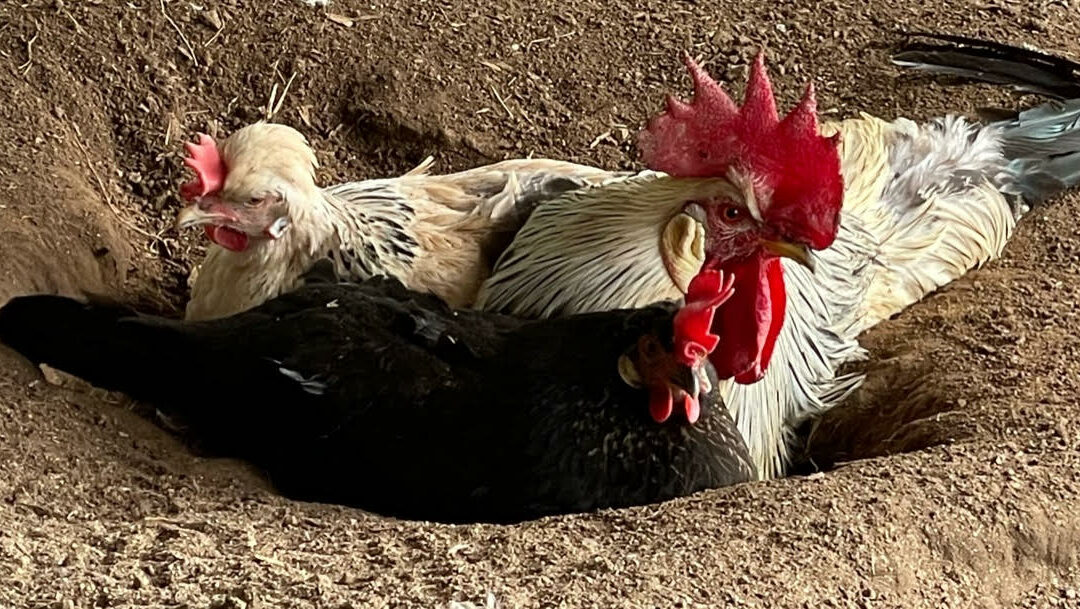
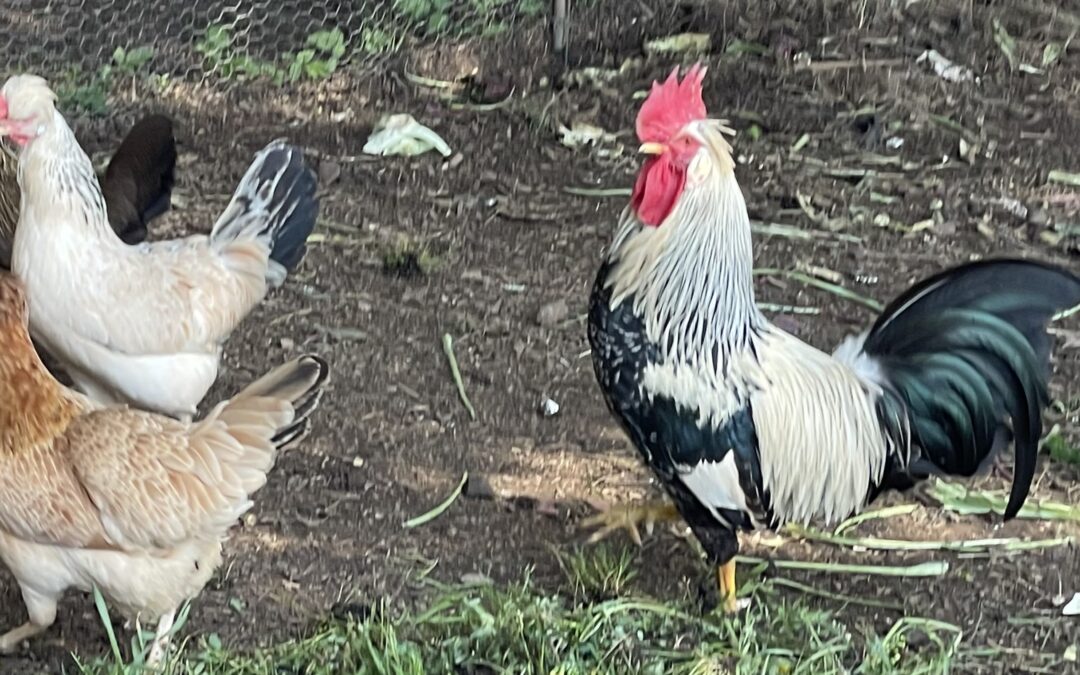
The grand finale came when I went up one night to put them to bed and, as I peered into the coop, the two broody hens were pushed off to the side, Sally was sitting in the nesting box on some eggs with her chick peeking out from under her, and next to her was our rooster, Hei Hei, sitting on the balance of the eggs.

All the confusion occurred because no one was clear on what their role was. Everyone in the coop was “dabbling” in incubating the eggs, but this kept the two hens designated for the role from doing their job.

How often do people in your organization veer outside their accountabilities because they like the work, or perhaps they don’t trust the person accountable to actually do the work? Do you have people stepping in because they see no one is handling something? Or on the flip side, do you have situations where no one takes accountability for something because they assume someone else is handling it?

In a recent EOS session, one of my clients was discussing the lack of a sales pipeline for incoming jobs. When I asked them who was accountable for sales, I got a bunch of blank stares. So I pulled out the accountability chart and used that as the foundation for our discussion. Guess what? It wasn’t crystal clear who was accountable, so everyone on the team assumed someone else was handling it.

Accountability doesn’t mean that one person does all the work. What it means is if you aren’t getting the results you need in a particular part of your business, everyone is clear on who needs to address the issue. If you are missing your sales numbers, the person accountable for sales needs to own this. If you’re struggling with scrap in a particular area of your process, you need to know who is accountable for scrap in that area.

When you are IDS-ing (IDS-ing my Broody Hen Issue), you can use a technique I call “Who Who One Sentence” as a framework for solving accountability issues. Who is Accountable? Who can solve it? In one sentence, what do you need?

The person sitting in a seat on the accountability seat should have the skills, abilities, knowledge, and passion to solve the problem. If not, you might have a people issue.

If chickens can get confused as to who is accountable for sitting on their eggs, imagine how confusing accountability can be in an organization full of humans. If you want to get more of the right things done, start by getting clear on who is accountable for what.

Need help? I’m just a call/email away.

IDS-ing my Broody Hen Issue

IDS-ing my Broody Hen Issue

In the life of caring for chickens, there are only a handful of things that can happen: egg laying, rooster drama, illness, death (not always by a natural predator, sometimes, it’s a dog), broody hens, and flying the coop. I’ve had to address all of these issues in the past few years. I entered this spring season feeling really good about what was happening up at the coop. We had plenty of hens laying lots of eggs, and an inquisitive rooster who hadn’t become aggressive (yet).

With spring comes the maternal instinct. Suddenly I found myself with not one, but two broody hens. This time around, I was determined to have a better outcome than last summer’s fiasco, when we had three broody hens sitting on 36 eggs and gathering up all the other hens’ eggs – in other words, no eggs for us.

So, on Good Friday in the cover of darkness, I moved each hen and her respective eggs to the peep pens. Keeping them separated from the other hens will protect the peeps from being attacked by other hens or falling off the coop ramp. It also limits the number of eggs in their clutch.

After getting them settled, I closed them in for the night. The next morning, they were both sitting on their eggs, and I left feeling pretty good about myself. That is, until later that afternoon, when I returned to the coop to find that both hens had left their peep pens and their eggs and were now sitting on new eggs in the larger coop. They had abandoned their 12 eggs and were starting over again with newly laid eggs.

After waiting about 48 hours to ensure they had accumulated enough new eggs to form a clutch, I moved them again, but this time, I closed the gate to prevent them from returning to the larger coop. I check on them later that day, and sure enough, they were back in the larger coop. They were so determined, they’d either figured out how to open and close a gate or managed to fly through a fairly small opening near the top of the gate. Either way, they were back sitting on eggs in the larger coop.

So we settled for Plan C, which was to leave them in the larger coop but mark the eggs they were sitting on, then periodically remove the unmarked eggs from under their care. In the end, they had around 10 eggs to incubate. About 3 days prior to the end of the gestation period, we moved them again into the peep pens. Fortunately, they stayed put and hatched some peeps. The yield was low, with five peeps hatching; at this writing, three have survived.

Managing broody hens is just one of the chicken issues that I am learning to navigate. I know every time it happens, I’ll get better at handling this issue.

Along the same lines, when I’m working with my clients implementing EOS, I remind them that there are just 23 issues in the history of running a business. The goal is to get them really good at solving those issues at the root so they go away forever.

The tool we use is called IDS, which stands for Identify – Discuss – Solve. Gino Wickman developed this tool when he realized that most teams, even high-functioning teams, are really good at getting into a room and discussing the heck out of problem, rarely identifying the root cause, and even more rarely solving the problem so it goes away forever.

Most teams just love to talk and talk and talk about an issue and then move on to the next issue before solving the one at hand. Some people may even do this intentionally in an effort to numb others into agreeing with them. And lots of my clients start solving one problem but soon realize they have followed a squirrel on a tangent that has nothing to do with the issue at hand. So to make IDS effective requires discipline.

Here is how the tool works. First, pick the three most important issues the team needs to solve. Don’t overanalyze this – just pick the most important issues. Then, start working on issue number 1. First step: identify the root cause. Of the three steps, this should take the most time, because once you dig down and identify the root cause, the rest is much easier. For example, if you aren’t hitting your sales targets, ask why. Then keep asking why until you have arrived at the root cause. Not sure you have arrived at the root cause? Ask why again just to make sure.

Once you have Identified the root cause, it’s time to move to Discuss. In this step, everyone gets to participate in the discussion, but you can say something once and only once, because more than once is politicking. And no one wants to beat a dead horse. If you stick to this rule, the conversation will eventually become stale and nothing new will be brought up. At that point, it is time to Solve.

In the Solve step, the team agrees on an action that needs to be taken. That may mean assigning a To-Do, communicating with some employees or possibly someone needs to do more research on the issue. Once you all agree on the action, make sure it is captured on your To-Do list.

At that point, you go back to the original list of three issues, pick the second most important issue and repeat the process. If you follow this process, you will get much better at solving issues and making them go away forever.

A word of advice: don’t shy away from the elephant in the room. If the root cause turns out to be a person in the room, talk about it. Be open and honest, which translates to saying what needs to be said, when it needs to be said, with the fewest words possible. I’m not saying you should attack the person. It’s important to focus on the person’s actions, not the person. Just don’t avoid the hard topics.

I’ve been using IDS to solve my broody hen issue. But after a few attempts to limit the number of eggs in my hen’s clutch, I came to the realization that the real issue is my chicken mama skills.

Give IDS a try and let me know how it goes. And if you have any tips on how to strengthen my chicken mama skills, I’d welcome the input – but please don’t attack me!

Should my chickens be able to live the EOS Life?

Should my chickens be able to live the EOS Life?

We are approaching my favorite day of the year! A three day weekend after a day with my family. My favorite way to spend the day is outdoors! But one thing is for sure: I toast the start of the holiday season with an eggnog latte.

Every year, that latte reminds me that I want to make my own eggnog, but all my research shows that the longer it ages, the better it tastes (though my husband would argue it never tastes good). Well, this is the year for me to make eggnog!

In my search for the perfect recipe I learned that eggnog was invented as a way to use up an abundance of eggs from early fall, when hens are laying aplenty due to the abundance of sunlight.  With sufficient sunlight, hens will lay an egg approximately every 25 hours. Sufficient sunlight is about 15-16 hours/day. Without less light, egg production slows down significantly.

The egg production from my 10 hens is currently around 1 egg per day.  In fact, none of my new peeps have laid an egg (at least I don’t think they have), even though they are 21 weeks old.

So, understanding the importance of sunlight for egg production, I have two choices: accept my measly harvest of eggs or put a light in their coop to make up for the sunlight deficiency.

The logical choice is to light up the coop. But there are potential negative impacts to their health. As we know, winter is the season to rest and rejuvenate, and if I keep my chickens working through winter, it could reduce their life expectancy.

So what is more important? Eggs or hen longevity?

How many of us are faced with similar choices – rest or keep working?  Do we keep pushing through the exhaustion in order to produce more, or do we allow ourselves time to rest? 

What about your employees? Are you allowing them time to rest and rejuvenate?  Does your vacation policy support allowing employees to unplug from their work and really rest, or do you encourage them to check in during their time off?  

In some of the companies I work with, people carry like a badge of honor that they work seven days a week or they work until 11pm every night. I know plenty of people who love their jobs, but if it consumes your or your employees’ lives, is it possible that that love has morphed into something unhealthy? Some people use work as a filler because they have no idea what to do when they aren’t working.

What if your work, or your employees’ work, were more than a filler? What if it work could be something you loved but also allowed you to follow other passions?

In his book The EOS Life, Gino Wickman defines the EOS life to mean: 

  1. Doing work you love
  2. With people you love
  3. Making a huge difference
  4. Being compensated appropriately
  5. With time for other passions

My goal when working with my clients is to help them live their EOS life and to make that possible for everyone who is a part of their company.  

If you are ready to experience what that would mean to you, your employees and your business, email me and we can start your journey together!

For me, my EOS life will likely include some aged eggnog and hens who can relax over the winter, poised to hit record-setting egg production in 2022!

Happy Holidays!

Finding the Optimal Chicken Interaction

Finding the Optimal Chicken Interaction

I was talking with a business owner last week, and she mentioned she had an Instagram blog titled “My chickens are in love with my husband.” Then she told me how, that very morning, one of her hens had flown up on the windowsill and started pecking at the window. She told the hen her husband wasn’t home, so she flew down and laid an egg right next to one of his shoes.

I guess I’m not the only one who writes about chickens? 

But then I started to think about my chickens. They are definitely not looking for me. In fact, whenever they see me approach the coop, they scatter with haste.

Why the difference in how these two sets of chickens respond to human interaction? Well, I’m not an animal behavioral scientist, but I think it has to do with the type of interaction they received in their early peep-formative weeks.

This woman shared that she brought her peeps home when they were a few days old, and everyone was holding them, so they got used to human interaction and felt safe. 

My chickens were not held at a young age. They were raised by their momma hen, and that hen was very scared of me, my husband and especially my inquisitive hunting dogs.

I’d like to think there is some common ground between chickens who love their owners and those that are deathly scared of their owners. And this common ground is established according to the amount of interaction the chickens experience early on.

The same might be true when it comes to interacting with members of our own flocks. If we have too much interaction, we risk smothering each other, but if we don’t have enough, we lose connection.

Maintaining the appropriate level of interaction takes intentionality. When implementing EOS, we teach the importance of keeping the team connected by establishing a good meeting pulse. This meeting pulse instills accountability, enhances communication, improves team health, and accelerates results.

In the era of Covid, it has been challenging to find the right pulse to stay connected, which can have negative effects on key relationships. I also believe it gives us an excuse to neglect our more challenging relationships, both personally and professionally.

As you look at the relationships in your life, how do you see them functioning? Do you sense a lack of connection and alignment? If you want to gain traction toward your vision, you need everyone connected and moving in the same direction.  

If you want a proven process that can help accelerate your business in the right direction, I’d love to introduce you to EOS. Together, we can get the entire team aligned and working toward a healthy future. 

Exciting Announcement (and it isn’t about chickens)

Exciting Announcement (and it isn’t about chickens)

Life is good out in the country.  Our little chicks are now 11 weeks old.  We have at least three young roosters (properly called cockerels).  It is so entertaining listening to them learn how to crow.  Quite honestly, I find it much more enjoyable than listening to Oden, our old rooster.  A couple of weeks ago, one of our young hens (properly called a pullet) laid an egg.  It was so small compared to our other eggs.
 
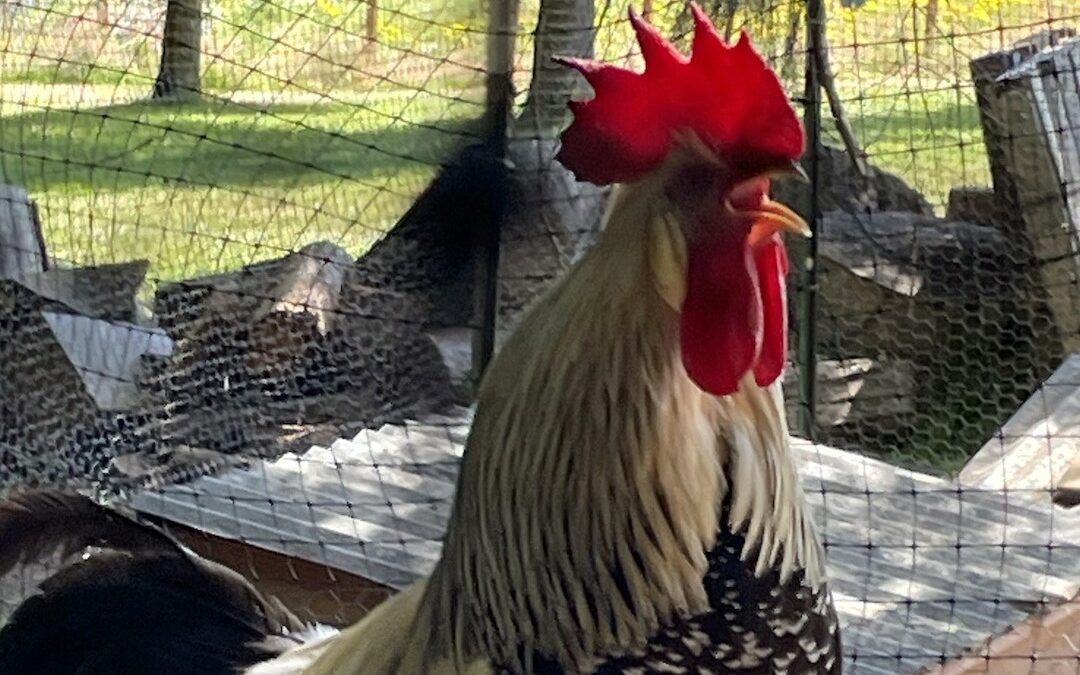
I believe this enjoyment came from addressing my issues with Oden.  Yes, he still needs to be reminded who is at the top of the pecking order.  Yes, he still makes me a bit nervous at times.  But, overall, everything changed for me once we came to a new understanding.  And now, I’m enjoying being a chicken mama.
 
I have heard similar expressions of enjoyment from my clients after implementing EOS.  Here are a few quotes from my clients:

  • We finally have the right people in the right seats so we can focus on the more pressing issues
  • I have more energy for my business than I have had in years
  • My board has fully bought into our vision and has committed extra resources to ensure we achieve it
  • My team is finally working together to solve problems, rather than pointing fingers
  • I am fired up about our 10-year target! And the team loves it, too!

This energy coming from my clients fueled my desire to take the next step in my EOS career. So, after attending the training, I am now a Professional EOS Implementer, one of only 375 worldwide. 

EOS (The Entrepreneurial Operating System) is a powerful system that takes a holistic, self-sustaining approach to building a great company.  It helps business owners get the most out of their businesses.  We have delivered over 91,000 full-day sessions for more than 11,900 companies. As a result, these companies:

  • Crystallize their vision, getting everyone on the same page and rowing in the same direction;
  • Gain tremendous traction by building discipline and accountability into the organization; and
  • Create a healthy, functional, and cohesive leadership team and company. 

For actual client testimonials, visit www.eosworldwide.com/testimonials or www.eosworldwide.com/eosstory to watch a short 4-minute video.
 
Want to see how your company is performing? Take an organizational check-up here.
 
This real-world, proven system is also captured in the award-winning book Traction: Get a Grip on Your Business.  You can get a copy here or send me an email and I’ll send you a free copy. 
 
If you know of a business owner/entrepreneur who is frustrated and/or looking to get more out of their business, I’d appreciate a referral.  You have my word: I’ll care for them like I care for my chickens, and they will thank you for it!
 
Cheers to enjoying a little EOS in our lives!